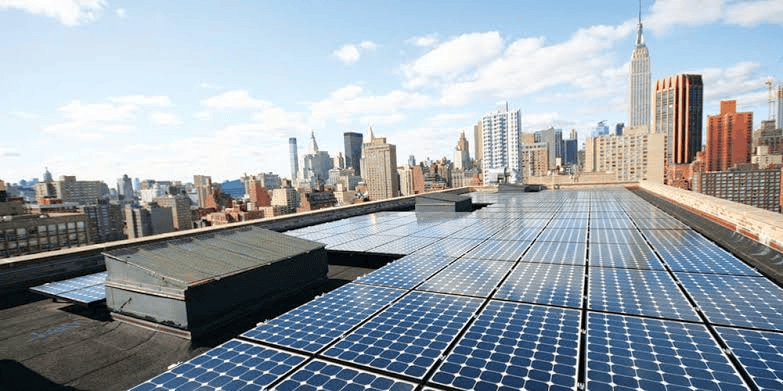
The installation of community solar energy systems is becoming common in the United States; however, their growth is only evident in few states. The presence of favorable policies at the state level, regulations, and existing community solar projects has enabled some states to grow faster compared to others.
This imbalance has significant ramifications on renter-owned households, households living in homes with shaded rooftops, and homes where the installation of roof-top solar is impossible.
How Community Solar Works
Community solar involves the participation of more than one household in a joint solar program, rather than having the panels installed on their property. Credits are usually awarded to subscribers through their energy bills, in accordance with their proportional contribution to the output generated by the solar project.
This approach can prove especially beneficial for renters and homeowners with properties where the installation of rooftop solar is not possible due to shading or lack of space.
In cases where a property is suitable for the installation of rooftop solar, rooftop solar may still serve as an alternative for homeowners.
New York Leads Recent Community Solar Growth
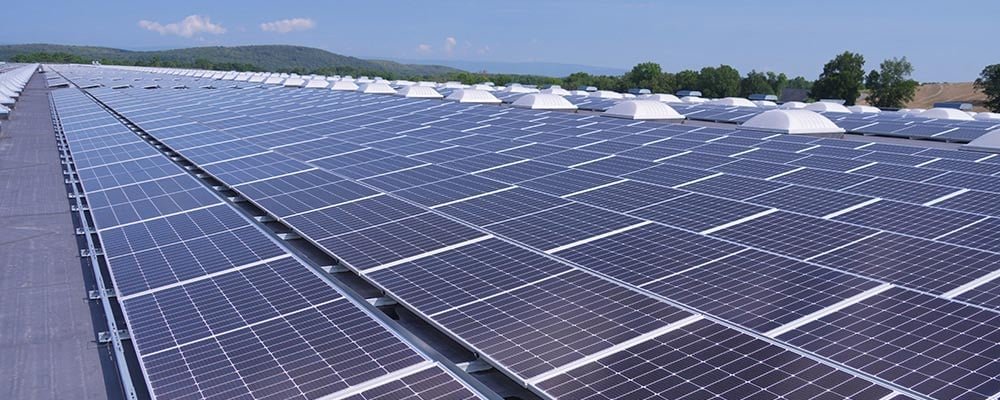
The data released on the second quarter of 2026 indicates that the growth of community solar has not occurred evenly across all states in the country. In fact, as per the figures mentioned in PV Magazine and Community Solar Tracker of the Institute for Local Self-Reliance, New Jersey, New York, and Oregon were the only three states in which more than 1% growth of capacity was witnessed during that quarter.
It is notable here that the state of New York was especially prominent during this period with 202 MWs added to its community solar capacity during the second quarter – accounting for around 7% growth in capacity compared to the previous quarter.
This trend indicates that existing state programs have a crucial impact on the pace at which community solar capacity gets developed.
Most Community Solar Capacity Is Concentrated
However, community solar development is still quite geographically concentrated. Statistics published by the National Renewable Energy Laboratory show that about 91% of the community solar capacity in the country is present in only 10 states.
Furthermore, according to the Institute for Local Self-Reliance, community solar projects are presently allowed in only 18 states and Washington D.C. Thus, people living in other parts of the country have fewer chances to take part in shared solar projects.
In this regard, the disparity between different states might depend on such variables as the process of connecting to the power grid, project regulations, economics, etc.
Why Policy Matters for Solar Access
Community solar is not only about the need for renewable energy. The state rules may impact the process of setting up a community solar project, connecting it to the electric grid, and subscribing individuals into it.
In cases when there are delays created by the regulations and interconnection processes, development of community solar may go slower. The bill credit arrangements may also impact the economics of community solar subscription.
Well-established programs will allow for making community solar available to more households, including those which cannot install their own solar roofs.
Rooftop Solar and Community Solar Serve Different Needs
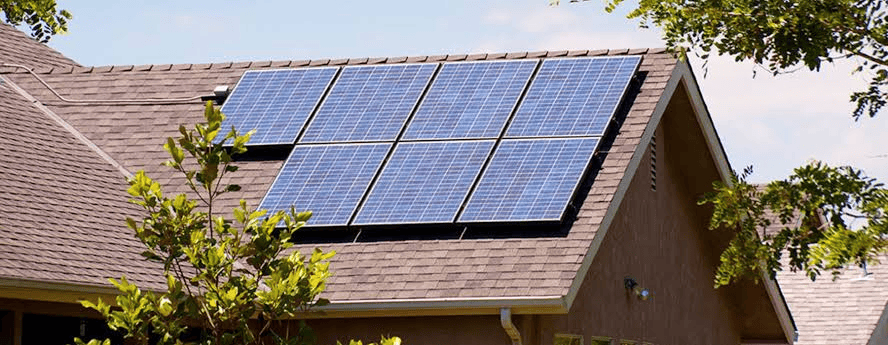
Community solar does not need to be a substitute for rooftop solar. In fact, the two can coexist to meet the needs of various homeowners.
Those with appropriate roof structures may decide to install their solar panels and produce power on-site at their homes. Some others will opt for community solar because they live in rented houses, have small roof spaces, or do not receive adequate sunlight in their properties.
Energy storage systems, like batteries, are also among the options to consider for solar customers when considering how best to consume the energy generated.
As the costs and programs differ from one place to another, homeowners should assess their options in their areas.
What the Current Growth Pattern Shows
The most recent statistics on community solar are indicative of a larger problem within the U.S. renewable energy marketplace – access depends significantly on state policy and local policy.
Three of the top states with continued growth in community solar development include New York, New Jersey, and Oregon, whereas other states are working to implement their own programs. In addition, much of the nation’s capacity is found within a limited number of markets.
For residents, being aware of the policies and the programs in your area may be just as important as learning about the technology itself. With more and more states looking into how to make renewable energy accessible, community solar may play a greater role than before.
Conclusion
Community solar is providing further options for people to be involved in renewable energy projects without necessarily installing their own solar panels. But recent growth in the U.S. is restricted to those areas that have a program and favorable regulatory regime in place.
The continued growth in New York is an example of how state policies and project development may affect the proliferation of community solar projects. With increasing number of community solar programs coming into existence in other regions as well, regulatory regime and grid connections are likely to become significant.
Frequently Asked Questions
It could be advantageous to those people who rent homes and do not have suitable places where they could install their own photovoltaic panels due to various reasons such as shading, roof constraints, space constraints, etc.
Different growth speeds could be observed as a result of different state laws, different utility programs, interconnection processes, cost considerations, and electricity bill credits structure.