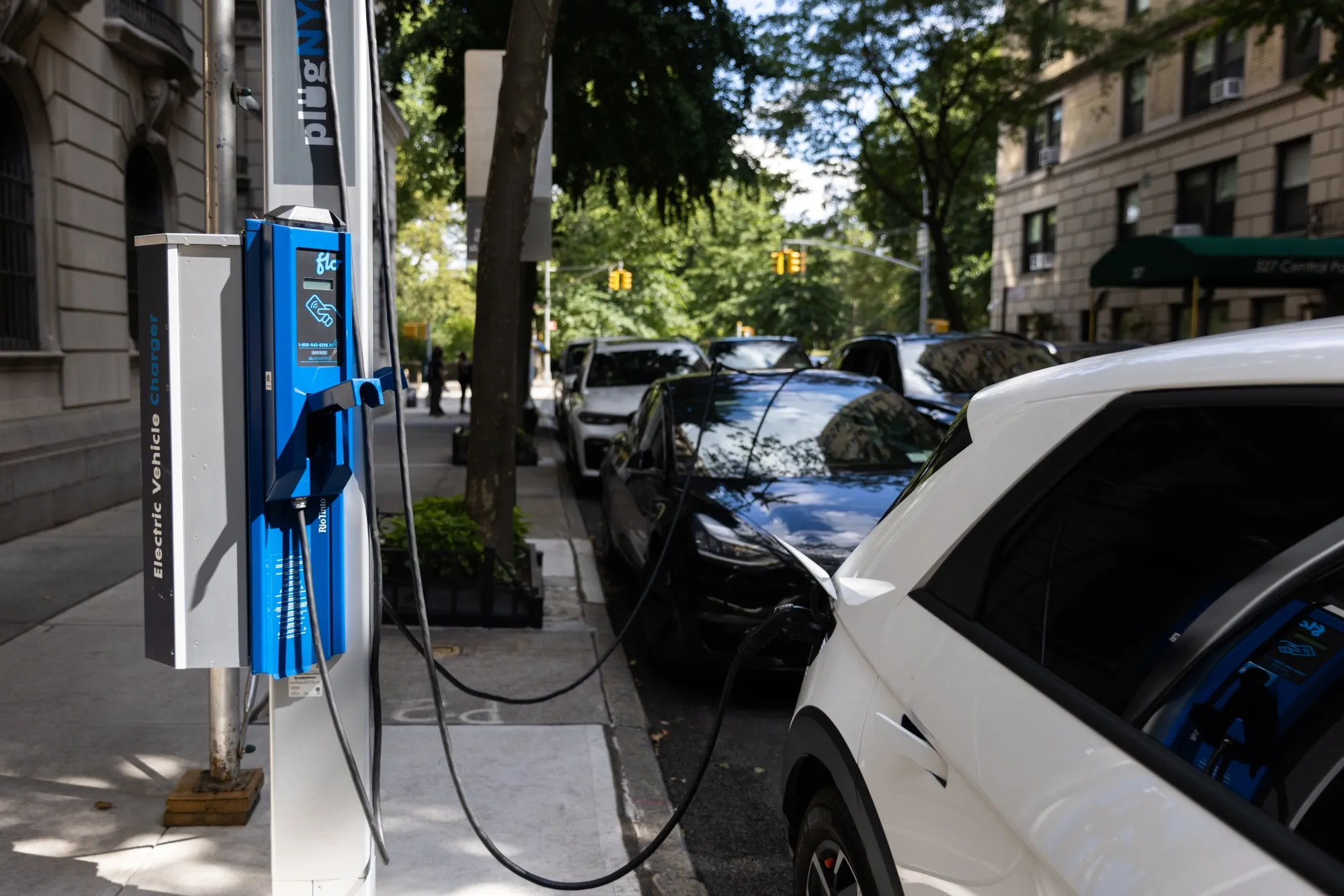
New York City is taking steps to make electric vehicle ownership more practical for residents who cannot rely on private home charging. With limited parking and a high concentration of apartment buildings, access to convenient public charging remains an important consideration for EV drivers across the city.
The city plans to significantly expand its public charging network over the next three years, with nearly 1,000 additional charging points planned across all five boroughs. The expansion includes approximately 600 curbside chargers designed to provide EV drivers with more opportunities to charge while parked near their homes or daily destinations.
Curbside Charging Targets Areas with Limited Parking
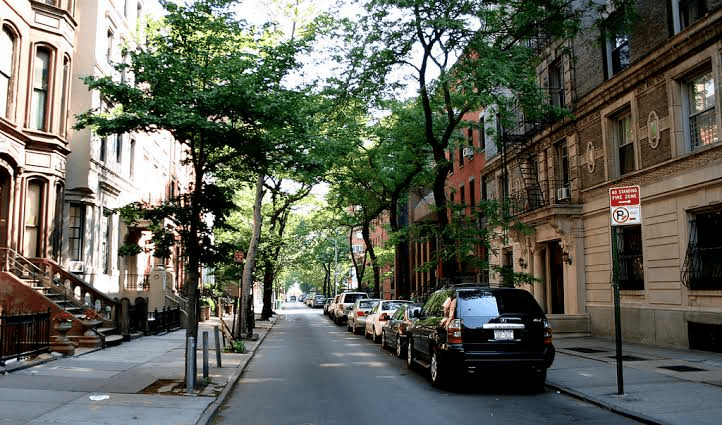
The new curbside charging stations are intended to serve neighborhoods where residential density is high and off-street parking is limited. The program also places emphasis on communities where private charging infrastructure has historically been less available, including low- and moderate-income neighborhoods.
Initial locations include areas such as Soundview and Unionport in the Bronx, Rego Park and Forest Hills in Queens, Red Hook and Bedford-Stuyvesant in Brooklyn, the Upper West Side and Washington Heights in Manhattan, and Stapleton on Staten Island.
The approach reflects a broader challenge facing urban EV adoption. Drivers who live in apartments or rely on street parking may have few opportunities to charge overnight, making dependable public infrastructure particularly important.
Each New Station Will Support Multiple Vehicles
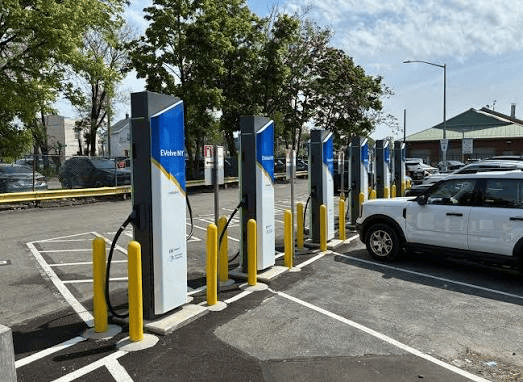
The planned curbside stations will be designed with multiple charging connections. Each location is expected to include at least two parking stalls with two charging points per stall, creating four charging connectors at each station.
The infrastructure is also being planned with future transportation needs in mind. Where feasible, electrical connections may support other forms of electric mobility, including e-bike charging, electrified bike-share infrastructure, secure bicycle parking with charging capabilities, and other micromobility applications.
This type of planning could allow the city to expand charging options without repeatedly disrupting streets for additional electrical installations.
Fast Charging Is Also Being Expanded
Curbside Level 2 charging is only one part of New York City’s broader EV infrastructure strategy. The city is also adding 92 DC fast-charging points and 180 additional Level 2 charging points at municipal parking fields and garages.
Fast chargers can be particularly useful for drivers who need to replenish their batteries in a shorter period, while Level 2 stations are generally better suited to longer parking periods. Having both options available could give EV drivers greater flexibility depending on their schedules and charging needs.
Charging Access Could Benefit Professional Drivers
The expansion may also be significant for licensed taxi and ride-hailing drivers who depend heavily on their vehicles throughout the day. Reliable public charging can reduce the need to travel long distances simply to find an available charging station.
For drivers who spend many hours on city streets, charging infrastructure located in neighborhoods with high demand could help make electric vehicles more practical for daily commercial use.
Pricing and Payment Options Are Still Developing
The city has not finalized pricing for the new curbside charging stations. Officials have indicated that affordability will be considered while also encouraging drivers to move their vehicles after charging so that other EV owners can use the spaces.
Drivers are expected to have multiple payment options, including mobile applications and credit card payments. Charging fees are planned to be based on the amount of electricity delivered rather than simply the amount of time a vehicle remains connected.
Strong Demand Shows the Need for More Chargers
The planned expansion comes as existing public charging infrastructure experiences substantial demand. According to information cited by the NYC Department of Transportation, the city’s existing curbside charging network has experienced high utilization, with charging spaces frequently occupied by vehicles that are actively charging.
That level of demand highlights the importance of expanding infrastructure as more New Yorkers consider switching from gasoline-powered vehicles to EVs.
What the Expansion Means for New York’s EV Future
New York City’s charging expansion represents a significant step toward building a more accessible electric transportation network. For residents without garages or private driveways, curbside chargers could provide an important alternative to home charging.
The combination of curbside Level 2 chargers, municipal garage charging stations, and additional DC fast-charging infrastructure could give EV drivers more choices across the city’s neighborhoods.
Conclusion
New York City’s planned EV charging expansion could make electric vehicle ownership more accessible for residents who depend on street parking or lack private charging facilities. The addition of hundreds of curbside chargers, along with new Level 2 and DC fast-charging points at municipal parking facilities, is designed to address growing demand across the five boroughs.
As EV adoption continues to increase, convenient and reliable charging infrastructure will become increasingly important. The effectiveness of the expansion will depend on factors such as charger availability, pricing, maintenance, and strategic placement, but the investment signals a significant move toward a more EV-ready urban transportation network.
FAQs
New York City plans to add approximately 600 new curbside EV charging points as part of a broader expansion that includes nearly 1,000 additional charging points across the five boroughs.
Initial locations include neighborhoods in the Bronx, Queens, Brooklyn, Manhattan, and Staten Island. The chargers are being prioritized for areas with high residential density, limited off-street parking, and significant demand from EV and ride-hailing drivers.
Many New York City residents do not have access to private garages or driveways. Curbside chargers can provide these drivers with a practical public option for charging their vehicles while parked.ss to private garages or driveways. Curbside chargers can provide these drivers with a practical public option for charging their vehicles while parked.